
NEWS & Opinion
Robert
2026년 4월 16일
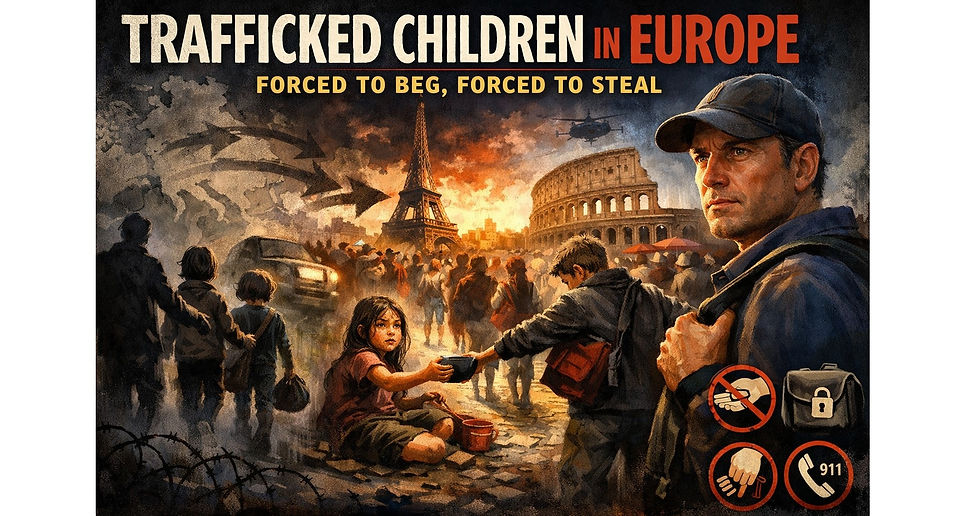
Tourist Hotspots Targeted: Children Trafficked from Eastern Europe for Begging and Theft
Major human‑trafficking networks are moving children from Eastern and Southeastern Europe into Western European tourist hubs — including Paris, Rome and parts of Spain — where they are forced to beg and commit petty crime; human rights groups say law‑enforcement responses remain uneven, and U.S. travelers should exercise heightened vigilance.
Overview
Human‑trafficking experts and international agencies report a rising pattern in which minors from Eastern and Southeastern Europe are recruited or abducted and transported across borders for forced begging, petty theft and other forms of exploitation. These children are frequently moved into high‑footfall tourist areas where demand and anonymity make exploitation profitable.
Where this is occurring
Primary source regions: Reports identify South‑eastern and parts of Eastern Europe as common origin areas for child victims.
Destination patterns: Traffickers often place children in major Western European tourist cities and coastal areas where crowds and cash transactions facilitate forced begging and pickpocketing. Human Rights groups and UN agencies have documented cross‑border movement and exploitation.
Law‑enforcement response and gaps
Rising caseloads: National police agencies in parts of Europe have reported increases in trafficking investigations in recent years, reflecting both more incidents and improved detection in some jurisdictions.
Enforcement challenges: International bodies note that exploitation increasingly occurs in private or informal settings and across borders, complicating detection and prosecution; NGOs say responses vary widely by country and locality, and that victims—especially children—are often reluctant or unable to access protection.
What U.S. travelers should know and do
Be alert in crowded tourist areas. Avoid engaging with groups of children who appear coached to beg or distract; these situations can be a sign of organized exploitation.
Do not give money directly to children. If you want to help, donate to established local charities or shelters rather than handing cash to minors.
Protect your belongings. Pickpocketing rings often operate alongside forced‑begging networks; keep valuables secured and use anti‑theft bags.
Report suspicious activity. Contact local police or consular services if you witness children being coerced, transported in groups, or used repeatedly in the same locations.
Plan ahead. Check travel advisories and NGO briefings for destination‑specific warnings before you go.
Risks and limitations
Data gaps: The true scale of child trafficking is difficult to measure because many victims are hidden, moved frequently, or misidentified as migrants or runaways.
Local variation: Police capacity and political will differ by city and country; some jurisdictions have stepped up prosecutions while others lag. Travelers should not assume uniform protection across Europe.
Sources
United Nations Office on Drugs and Crime (UNODC) reporting on child trafficking and exploitation in South‑eastern Europe.
EU / regional briefings on trafficking in children and evolving forms of exploitation.
Reporting on rising trafficking investigations in Europe (example: Germany police data).